Personal AI Workflows for Real Life
Save your context in a project and your method as a skill, so AI handles one recurring task your way. 2 hours, max 10 people, S$99.
Compare workshops →Paper & Pixel Learning is a playbook and two hands-on workshops that teach non-technical people to direct AI, inspect what it makes and improve it.
Save your context in a project and your method as a skill, so AI handles one recurring task your way. 2 hours, max 10 people, S$99.
Compare workshops →Build your own Telegram assistant and learn to give it useful jobs, check its work and put it into a routine. 3 hours, max 5 people, S$199.
Compare workshops →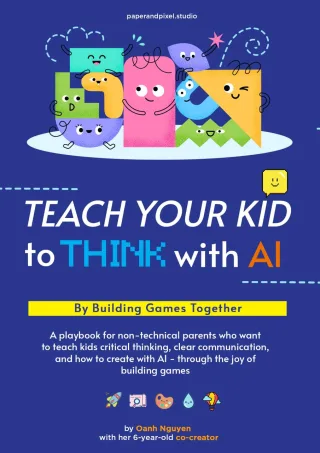
Build a simple game together, beginning with an idea on paper. Your child describes what they want, inspects what AI makes and keeps refining it until the result reflects their intent. No coding is required. A 38-page PDF and the Game Assistant bot, S$22.50.
Explore the playbookThe tools may change. The lasting skill is being able to make an idea clear, question the result and improve it.
Help children turn an idea into something they can test, discuss and improve, with an adult guiding the process.
Build a repeatable workflow for planning, research, learning or life admin while keeping your own preferences in view.
Give AI the right source material, constraints and output format, then review it with professional judgement.
The focus is not memorising prompts or following a tool demo. It is learning a repeatable way to think about an AI-assisted task.
Be specific about the need, the source material, the constraints and what a useful result should contain.
Check facts, notice missing context and look for where a confident answer may still be wrong or incomplete.
Let AI organise and draft. Keep approval for messages, money, official records and other consequential actions.
AI drafts; you decide. A useful assistant supports your thinking and work. It does not replace your responsibility for the outcome.
No. The playbook and Workshop 1 need no coding. Workshop 2 includes a guided technical setup, with Codex or Claude Code handling the commands.
Yes. They cover different things and there is no required order.
In the Paper & Pixel Arcade, a free collection of small games built as a family, including games shaped by a six-year-old directing AI through voice commands, testing the result and asking for changes. More about the Arcade →